Count the track rail parts for your run before you enquire.
Sampo Lighting makes conventional track rail in 2-wire, 3-wire, 4-wire and 6-wire systems, with the power feeds, joiners and mounting parts that finish a run. Pick a layout, type each leg length and you get a parts list you can check line by line and send with your enquiry.
- 2 / 3 / 4 / 6-wire rails
- Feeds & joiners
- Surface, recessed, suspended
- Heads matched to the rail

Rail parts planner
one continuous run · counted per legThe parts list appears here as you type. Without JavaScript, the count rules below give the same numbers by hand.
Counts assume one continuous run in the wire system selected; send this list with your enquiry to confirm the exact rail, finish and feed type for that system.
| Line | How it is counted |
|---|---|
| Rails | For each leg, divide the leg length by the assumed stock length and round up. Then add the legs together. Never divide the whole run in one go: a rail can't turn a corner. |
| Straight joiners | For each leg, the rails in that leg minus one. Then add the legs together. |
| Corner joiners | Straight run 0, L-shape 1, U-shape 2, rectangle 4. |
| Power feeds | 1 per run. A rectangle is a closed loop; long loops may need a second feed point — confirm. |
| End caps | 2 on an open run (straight, L or U); 0 on a closed rectangle. |
| Mounting | Named as chosen: surface, recessed or suspended. Fixing spacing is per model and ceiling — confirm. |
Worked example. L-shape, leg 1 = 4.5 m, leg 2 = 3.2 m, assumed stock length 2.0 m. Leg 1: 4.5 ÷ 2.0 = 2.25, round up to 3 rails and 2 straight joiners. Leg 2: 3.2 ÷ 2.0 = 1.6, round up to 2 rails and 1 straight joiner. Totals: 5 rails, 3 straight joiners, 1 corner joiner, 1 power feed, 2 end caps. Dividing the whole 7.7 m at once gives 4 rails — one short, because no rail bends round the corner.
How to read the result
The planner counts one leg at a time, because that's how rails are actually laid. A leg is a straight stretch between two corners, or between a corner and an open end. Each line of the list tells you something specific:
- Rails — each leg divided by the stock length you assumed, rounded up, then added together. A part-length at the end of a leg still costs a whole rail.
- Straight joiners — where two rails meet in a straight line: one fewer than the rails in that leg.
- Corner joiners — one per turn: none for a straight run, one for an L, two for a U, four for a closed rectangle.
- Power feeds — one per run; a long closed loop may need a second feed point, which we confirm with you.
- End caps — two for an open run, none for a rectangle because a loop has no open end.
- Mounting — the method you chose, named so it travels with the list. Fixing spacing depends on the model and the ceiling, so it's confirmed, not guessed.
What the list doesn't promise: that a given stock length exists for your chosen system, which finish is available, or which feed type suits your supply. Those three answers come back from us once we see the list. The stock lengths in the planner are your assumption, labelled that way, so the arithmetic stays honest.
Wire systems at a glance
All four systems →The rail you count is always in one wire system. More wires means more conductors inside the profile, which leaves room to separate circuits or groups of heads. The question to settle first is how many groups the run needs and how each is switched; the wire system follows from that answer, confirmed for the exact rail.
| System | Conductors | What changes | Ask first |
|---|---|---|---|
| 2-wire | The fewest conductors inside the rail. Treat the run as one supply path unless the factory confirms another arrangement. | Is one switching group enough for every head on this run? | |
| 3-wire | One conductor more than 2-wire, which leaves room to separate heads into groups along the same rail. | How many groups do you need, and how is each one switched? | |
| 4-wire | More conductors again, so more room to split circuits or groups along one rail. | Which heads belong to which group, and which control gear is planned? | |
| 6-wire | The most conductors in the conventional range, for runs where further separation is wanted. | Does the project really need this many separate paths, or would fewer do? |
Wire count tells you how many conductors run in the rail. It never tells you on its own which switching, grouping or dimming arrangement a run supports — that is confirmed per system.
What finishes a run
Connectors & feeds →Rails are only part of the order. The small parts are where lists usually come up short, so the planner counts them next to the rails.
Power feeds
Where supply enters the rail. It has to suit the wire system of the run.
In the count: 1 per runStraight joiners
Join two rails end to end within a leg, carrying every conductor across the joint.
In the count: rails per leg minus oneL and cross connectors
Turn the run at a corner, or join four legs at a crossing. Crossings sit outside the single-run planner.
In the count: 1 per cornerEnd caps & mounting parts
Close the open ends; suspension and recessed parts hold the rail to its ceiling.
In the count: 2 per open run
Kits vs loose parts
A kit packs the rails, feed, joiners, caps and mounting parts for one run together with track heads matched to that rail's wire system and voltage. Loose parts suit a contractor who already knows the run and wants to buy the count exactly. Either way, the parts list from the planner is the starting point.
Where rails go
Retail floors, galleries, showrooms and long perimeter runs all use the same counting logic; they just differ in how often the layout turns and how the ceiling takes a fixing. Each setting changes the leg lengths you'll type, not the arithmetic.
The full range behind the rail
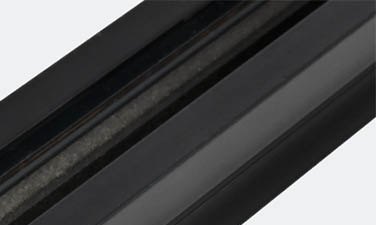
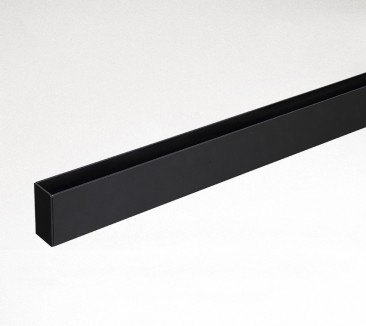
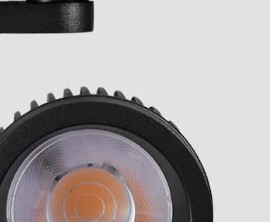
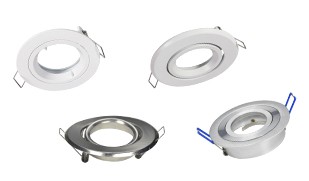
All 19 series →This site is about rails and the parts that complete them. The same factory also builds magnetic track (a separate system, never mixed with conventional rail in a count), track heads and downlights. They're listed in one place so you can add them to the same enquiry.
Custom rails and parts
If your project needs a rail finish, a set of parts or packaging agreed for your own brand, the OEM and ODM route starts the same way: a run, a parts list and the wire system. Everything beyond that is agreed per project and confirmed in writing before production.
Send the list, get the system confirmed
If you've run the planner above, the button carries your parts list into the enquiry form. We reply with the exact rail, finish and feed type for the wire system you picked, plus anything the count can't know.
- Email · [email protected]
- Phone / WhatsApp · +86 159 8611 6737
- Factory · Danzao, Nanhai, Foshan