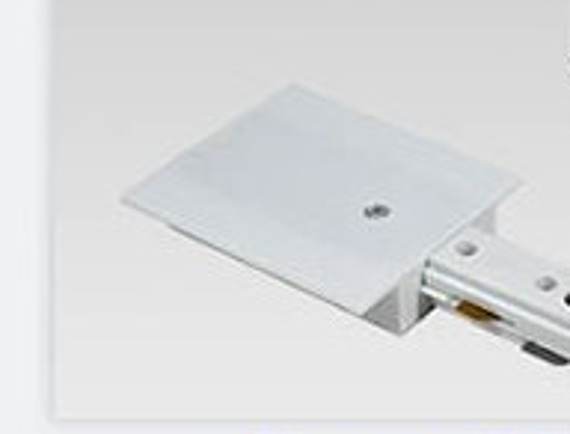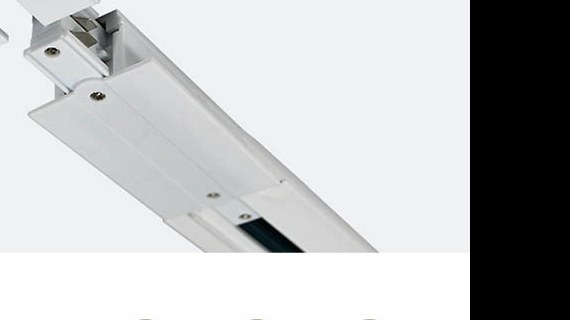
Sampo Lightingtrack rail
Rails · 2 / 3 / 4 / 6-wire

2, 3, 4 and 6-wire track rail: what changes and what to confirm

Sampo Lighting supplies conventional track rail in 2-wire, 3-wire, 4-wire and 6-wire formats, with feeds, straight, L and cross connectors, and suspension and recessed parts, as a set with matching track heads. The wire count tells you how many conductors run inside the rail. More conductors leave more room to separate circuits or groups of heads.

It doesn't tell you, by itself, how a particular run can be switched or grouped. That's confirmed per system before you order, and it's the first thing we check when a parts list arrives.

White conventional track rail run across a retail ceiling
White track rail run in a retail space.

The four wire systems side by side

Read this table from the right-hand column first. The question in it is the one that decides the system; the conductor count only follows from the answer.

SystemConductorsWhat changesAsk first
2-wireThe fewest conductors inside the rail. Treat the run as one supply path unless the factory confirms another arrangement.Is one switching group enough for every head on this run?
3-wireOne conductor more than 2-wire, which leaves room to separate heads into groups along the same rail.How many groups do you need, and how is each one switched?
4-wireMore conductors again, so more room to split circuits or groups along one rail.Which heads belong to which group, and which control gear is planned?
6-wireThe most conductors in the conventional range, for runs where further separation is wanted.Does the project really need this many separate paths, or would fewer do?

Wire count tells you how many conductors run in the rail. It never tells you on its own which switching, grouping or dimming arrangement a run supports — that is confirmed per system.

System by system

2-wire

2-wire track rail

The 2-wire rail carries the fewest conductors in the conventional range. It suits a run where every head can be treated as one group, but that's a judgement about your project, not a rule of the rail. Before choosing it, confirm with us how the exact system can be switched.

Ask before you choose:

  • Will every head on this run always be switched together?
  • Do the heads you have in mind match this rail and its voltage?
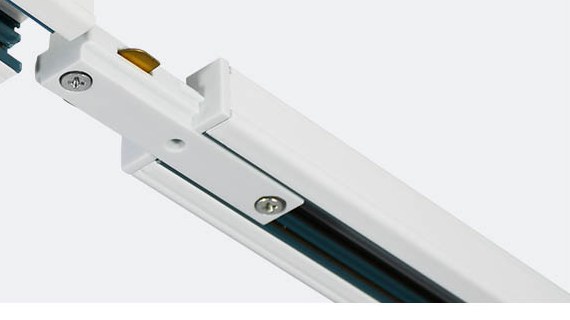
2-wire track rail
3-wire

3-wire track rail

The 3-wire rail adds a conductor, which leaves room to separate the heads on one rail into groups. How many groups, and how they're switched, depends on the exact system and the control gear around it — confirmed per system, not assumed from the number.

Ask before you choose:

  • How many groups of heads does the space need?
  • Is the grouping fixed at installation or changed later?
3-wire track rail
4-wire

4-wire track rail

The 4-wire rail carries more conductors again, so there's more room to split circuits or groups along a single run. It's a common question on longer runs that serve several zones; the arrangement you can actually use is confirmed for the exact rail and feed.

Ask before you choose:

  • Which zones share this run, and which heads sit in each?
  • Is the control gear already chosen, and by whom?
4-wire track rail
6-wire

6-wire track rail

The 6-wire rail has the most conductors in the conventional range. It's worth asking about when a project wants further separation on one run, and worth questioning when it doesn't — more conductors don't add value to a run that only ever needs one group.

Ask before you choose:

  • Does the project need this many separate paths?
  • Would two shorter runs with fewer wires do the same job?
6-wire track rail

How to choose

Three questions narrow it down, in this order.

  1. How many groups does the run serve? List the heads and say which ones should be switched together. One group, two groups or several — write it down before thinking about wires.
  2. How long is the run, and how often does it turn? Long runs and runs with several corners need more joiners and possibly a second feed point. The rail parts planner counts this for you per leg.
  3. Which heads go on it? Every head must match the rail wire system and voltage. If the heads are already chosen, send their details; if not, we'll match them from the range.

Only once those three answers exist does the wire system become a sensible choice. Picking the rail first and the grouping second is how runs end up either under-wired or carrying conductors nobody uses.

Magnetic track is a separate system

Magnetic track (M25, M35 and the 48V profiles) uses its own rails, connectors and fixtures. It's never mixed with conventional rail on a run or in a count, and the planner on this site counts conventional rail only. If you're comparing the two, look at the full range and ask us about both in the same enquiry.

Confirm list for any wire system

  1. Grouping and switching arrangement for the exact system and feed — never read off the wire count.
  2. Rail lengths actually available in that system, replacing any assumed stock length.
  3. Feed type, feed position and whether a second feed point is needed.
  4. Head match: wire system and voltage for every head on the run.
  5. Finish across rail, joiners, caps and feed.
  6. Certifications for the chosen models — per model, check the spec sheet.

Tell us the groups, we'll confirm the rail

Send the parts list from the planner together with how the heads should be grouped. We'll confirm which wire system fits and what the arrangement looks like on that exact rail.